
Mapping Anti-Muslim narratives surrounding Mamdani's elections in New York
Content warning: Presented data may contain disturbing language related to online hate speech.
On November 4, 2025, the democratic socialist candidate Zohran Mamdani won the mayoral election in New York City, becoming the first Muslim, South Asian, and African-born person to hold this position. His campaign centred around the values of pluralism and diversity, engaging voters both online and on the ground and mobilising a squad of over 100.000 volunteers.
Ahead of Mamdani’s primary victory, a social media investigation by Equality Labs found that online conversations were marked by Islamophobic and xenophobic narratives targeting the candidate, accusing him of being a ‘jihadist’, ‘pro-Hamas’, and a ‘terrorist’.
While the European Observatory of Online Hate primarily monitors hate speech trends within Europe, activity within our anti-Muslim monitoring channel showed a significant spike around the New York City mayoral election. This suggests that the online debate surrounding Zohran Mamdani’s candidacy was not confined to the United States but resonated across international digital spaces, including conversations within European networks. The scale of this spike indicated that the event became a focal point for broader anti-Muslim narratives circulating online.
For this reason, we examined how the online conversation evolved following Mamdani’s election, assessing whether anti-Muslim discourse increased and which narratives were most prominently used when discussing the candidate.
Dashboard findings
Our attention was first drawn to the case through a noticeable spike in our anti-Muslim monitoring dashboard across all languages. During the period surrounding the New York City mayoral election, the overall volume of conversations referencing Islam and Muslims increased sharply. On average, the dashboard records approximately 60,000 posts per day across monitored platforms. However, during the election period, this volume peaked at 113,868 posts, representing an increase of roughly 90% compared to the baseline daily average.
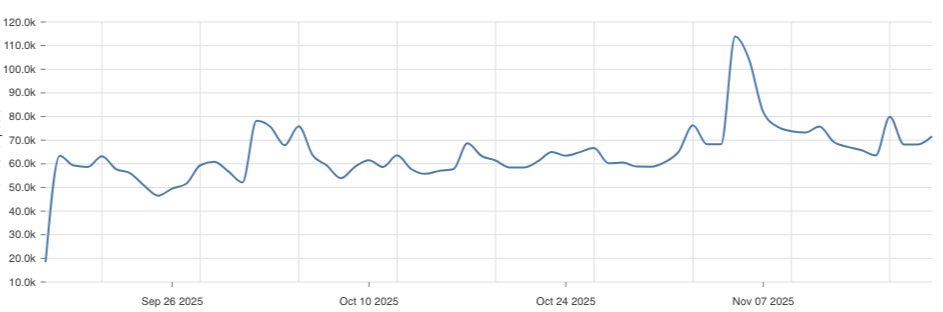
Importantly, this spike was not limited to English-language conversations. Similar increases were observed across many of the official languages of the European Union, suggesting that the debate surrounding the election resonated far beyond the United States.
The graphs below illustrate this trend across a selection of languages in the dashboard, including English, French, German, Hungarian, Romanian, and Spanish. These examples are intended as illustrations rather than an exhaustive overview of all monitored languages.
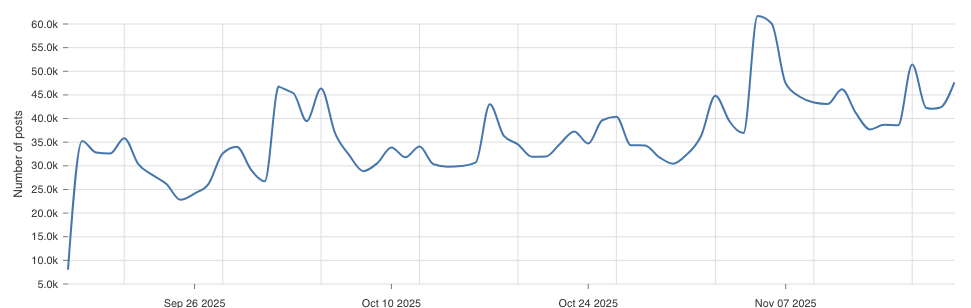
English
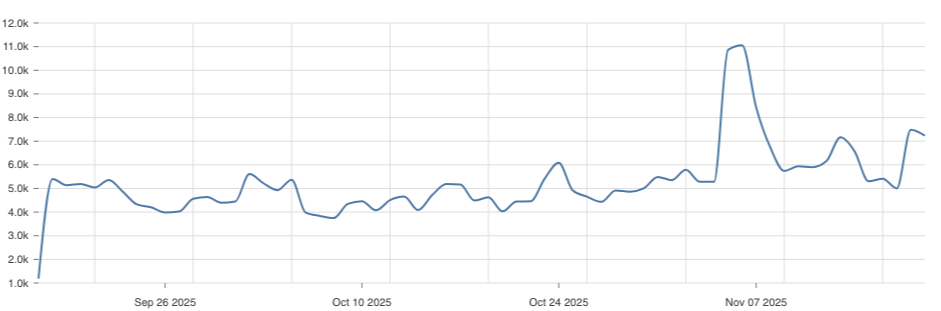
French
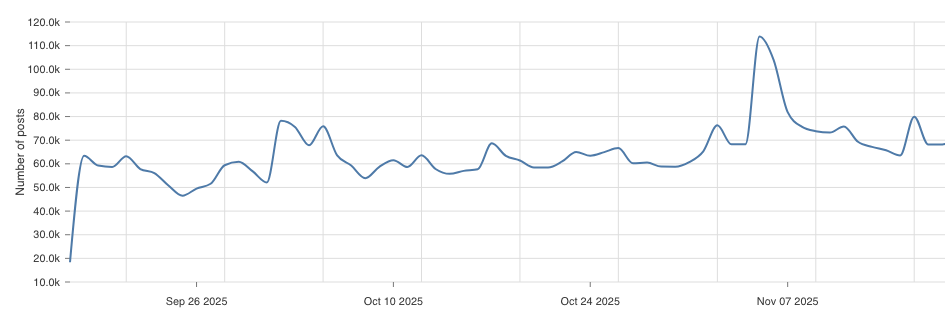
German
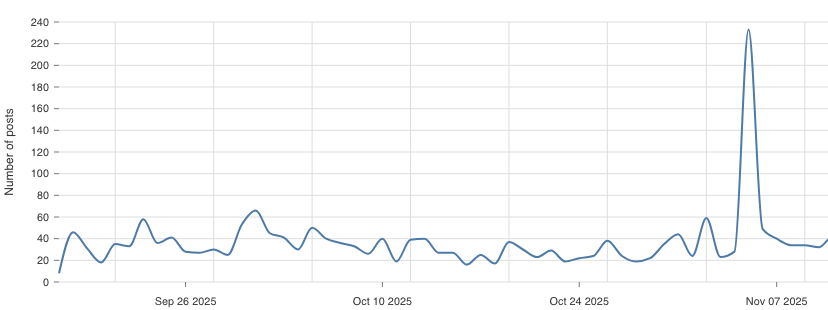
Hungarian
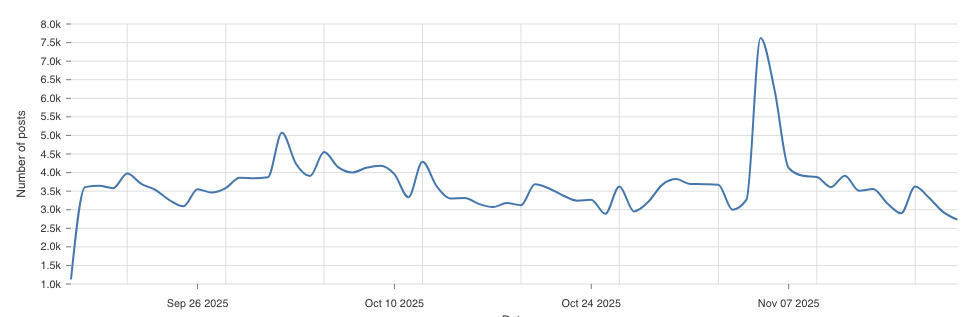
Spanish
The findings highlight how political developments in one part of the world can rapidly shape online discussions elsewhere. In this case, an election in a single city in the United States triggered a significant rise in conversations about Islam and Muslims across European digital spaces, including in local-language discussions. Such cross-border dynamics illustrate how international political events can act as catalysts for online discourse within the European information environment.
While the average toxicity levels in the dataset remained relatively stable, the overall increase in conversation volume means that the absolute number of toxic posts also increased during this period. In other words, even without a change in the proportion of toxic content, a surge in total posts results in a higher total volume of harmful messages circulating online.
These dynamics also underline the importance of regulatory frameworks such as the Digital Services Act, which aims to improve transparency and accountability in how platforms address systemic risks, including the spread of online hate. As this case illustrates, online conversations are often shaped by international developments, and harmful narratives can rapidly circulate across linguistic and national boundaries within the European digital space.
To gain deeper insights into the conversation, we looked for the keyword ‘Mamdani’ within our anti-Muslim channel, which monitors conversations around Islam and Muslim people using neutral keywords such as ‘Islam’ and ‘Muslim’.
We found that the total number of posts increased from 292 to almost 4500 between November 1 and November 5, demonstrating a sharp rise in online activity related to his name.
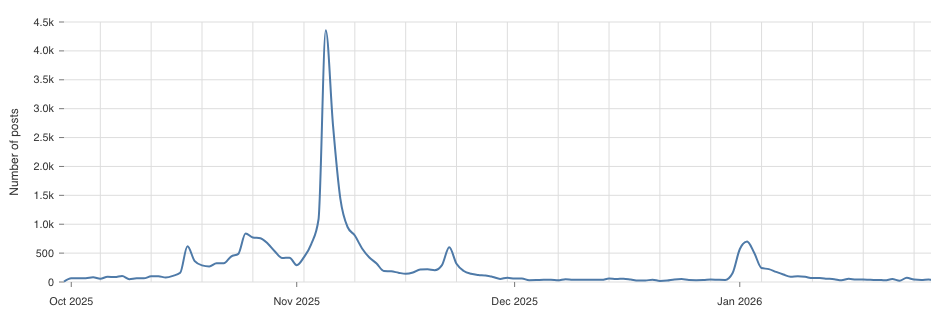
Similarly, posts containing moderate levels of toxicity increased by more than 800 in just three days, peaking on the election day.
Thematic analysis
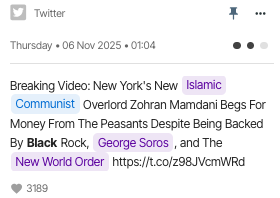
Conversations were marked by hateful and often conspiratorial accusations linking Mamdani to terrorism and communism. As shown in the examples below, we found posts that discredited the candidate by denouncing alleged affiliation with communism, a tactic known as ‘red-baiting’. This aligns with previous findings by the Centre for the Study of Organized Hate, which identified narratives of “ideological demonisation” used to portray Mamdani’s politics as inherently dangerous.
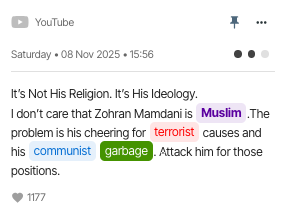
To further narrow our analysis, we created a new channel filtering posts that explicitly mentioned Mamdani. The resulting dataset contains 43,740 posts, of which 4,600 (10.5%) were classified as toxic. Most of the content was collected from Twitter (60%), followed by YouTube (33%) and TikTok (3%). Highly toxic messages were more frequent on Twitter, accounting for 63.4% of these posts.
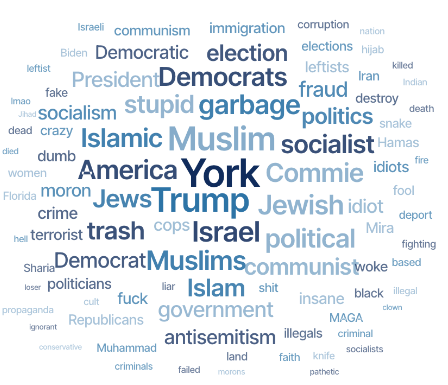
We found that the most frequently detected words were derogatory (stupid, garbage, trash), contained references to his religion (Muslims, Islam, Islamic), and mentioned derogatory words to refer to his alleged political affiliation (Commie, leftists, communist).
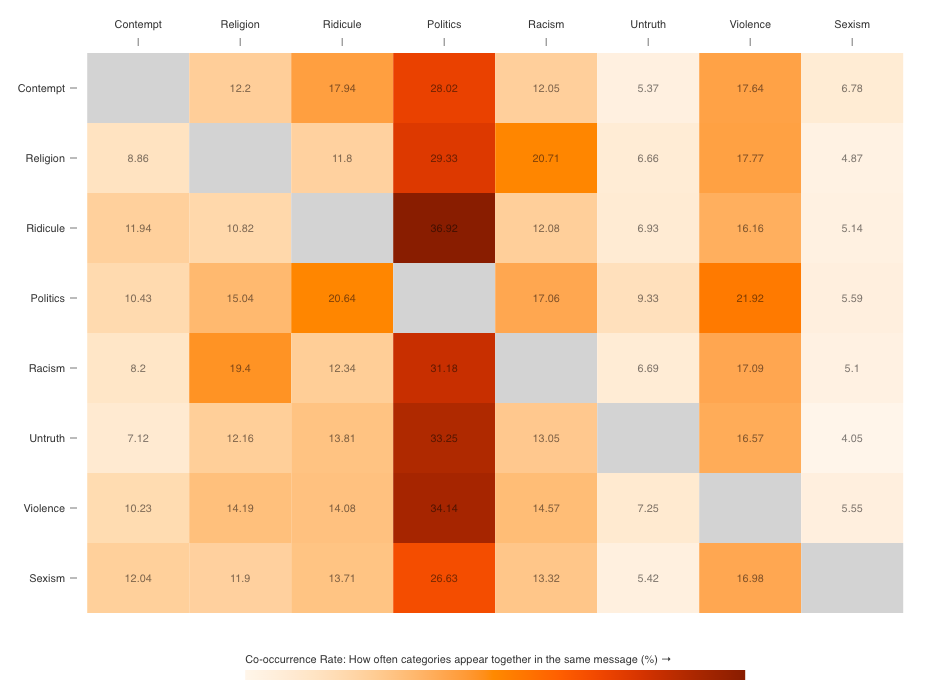
When examining the thematic intersection of hate, we found that 70% of the toxic conversations evolved around politics. These posts most frequently intersected with ridicule terms (36.9%), violence -related language (34.14%), untruth (33.25%), and racism (31.18%).
The case of Mamdani reflects the persistence of anti-Muslim discrimination and anti-Muslim hate in mainstream political discourse, amplified by political candidates in the United States, as illustrated in the example below.
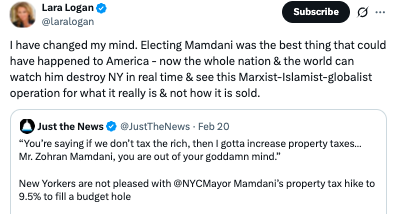
Social media has played a significant role in amplifying such Islamophobic, xenophobic, and red-baiting disinformation.
It also illustrates how online hate narratives can quickly transcend national boundaries. Although the election took place in the United States, discussions surrounding the candidate circulated widely across international digital spaces, including within European-language online communities.
This reflects the increasingly transnational nature of online discourse, where political events in one region can trigger or amplify existing narratives elsewhere. In this case, debates surrounding Mamdani’s candidacy became a vehicle through which broader anti-Muslim narratives were circulated across social media platforms and across linguistic and geographic boundaries.